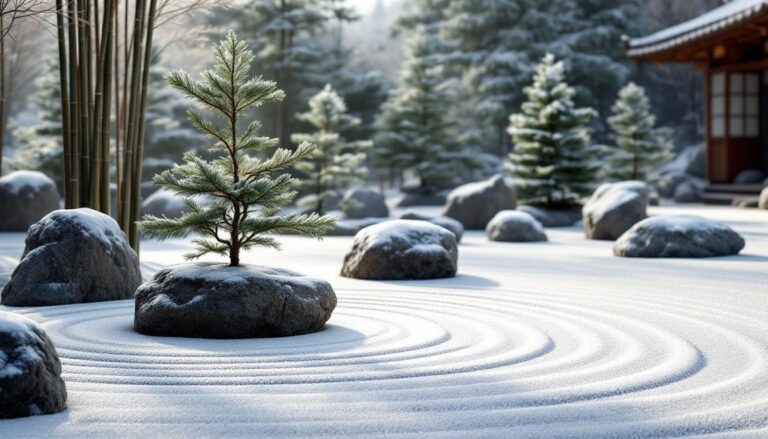
Winter unveils a unique charm in Japanese Zen gardens, offering a serene refuge filled with symbolism and artistry. As frost blankets the precisely raked sand and snow delicately carpets stone lanterns, the principles of minimalism and meditation come alive, creating a space for reflection and tranquility. The aesthetic beauty observed during this season embodies the Japanese philosophy of wabi-sabi, where the allure of imperfection and transience is celebrated. Gardeners apply traditional techniques such as yuki-tsuri to protect trees from heavy snow, showcasing resilience in nature and human effort. The interplay of seasonal elements transforms these gardens into captivating environments that inspire peace and mindfulness, merging strong cultural narratives with visual wonder.
In brief:
- 🌨️ Winter transforms Japanese Zen gardens into serene landscapes.
- 🌳 Techniques like yuki-tsuri protect plants during snowfall.
- 🌸 Winter blooms like camellias and plum trees add vibrant touches.
- 🌊 Key elements such as rocks, lanterns, and frost create striking contrasts.
- 🧘♂️ Winter gardens embody the essence of meditation and tranquility.
The Transformation of Japanese Gardens in Winter
As the temperature drops, the transformation of Japanese Zen gardens reveals a subtle yet captivating beauty. The frost accentuates the contours of rocks and the delicate structures of plants, inviting admiration and a sense of calm. Snow, acting as a blanket, wraps trees and pathways, emphasizing their architectural forms, while the reflective qualities of water features suggest tranquility and peace.
Frost’s Effect and Nature’s Ornamentation
Frost brings an enchanting touch to the landscape, effectively creating a dazzling visual spectacle. Individual elements like branches and stones are highlighted, drawing attention to their unique structures. As snow accumulates, it serves both as a natural ornamentation and a means of protecting the garden’s life, from delicate blossoms to strong evergreens, reinforcing the interconnectedness of all elements in Japanese gardening.
Key Elements of a Winter Japanese Garden
Winter gardens feature a variety of distinct elements that maintain beauty and symbolism even in the cold. Among these, evergreen plants take center stage, representing resilience against the chill. Their presence lends the landscape continuity and color during the cold months, reminding visitors that life persists against the odds.
The pruning mistake that stops your tree from growing.
The Role of Evergreen Plants
Evergreens play an essential role in maintaining the visual richness of a winter garden. Plants such as Japanese black pine and hinoki cypress provide depth and texture, complemented by the contrasting forms of raked sand and rocks. Their enduring presence serves as a metaphor for eternal life in nature, reinforcing the garden’s tranquil narrative.
Architectural Features Emphasizing Winter Beauty
Architectural components such as tea houses and stone lanterns provide striking visuals against the winter backdrop. Covered in snow, they assume a magical appearance, beckoning solitude seekers to enjoy warmth amid chilly surroundings. These structures can serve as contemplative spaces, encouraging reflection on nature’s cycles and the beauty of the moment.
Enhancing Pathways for Winter Exploration
Pathways through the garden encourage visitors to experience the tranquil beauty of winter landscapes. Designed with intention, they guide the viewer toward different garden zones, revealing the seasonal story gradually. Covered in a layer of snow, these paths create an inviting roadmap for exploration and mindfulness, enriching the overall experience of serenity.
Emotional and Cultural Significance of Winter Gardens
The emotional impact of winter gardens resonates deeply within the context of Japanese culture. Gardens are places for meditation and reflection, enhanced by muted colors and calm atmospheres. The concept of mono no aware, or appreciation of transience, is palpably felt as visitors embrace the fleeting beauty encapsulated in frost and snow, encouraging personal introspection and a connection to nature’s cycles.
Winter Illuminations in Japanese Gardens
During winter months, illumination takes on an ethereal quality in Japanese gardens. Traditional lanterns, paired with modern lighting structures, create a magical ambiance that uplifts the winter experience. The plays of light accentuate the garden’s forms, casting gentle shadows that enhance the overall tranquility of the space.
Cultural Festivals Celebrating Winter Gardens
Various regions in Japan celebrate the winter through special events. Gardens like Kenroku-en and Sankei-en attract visitors with their remarkable displays of snow-laden flora and traditional decor. Festivals often feature artistic illuminations that make these gardens a spectacle, inviting guests to engage in winter’s serene beauty collectively.
Winter encompasses a distinct beauty within Japanese gardens that appeals not only to the eye but also the heart. Through the harmony of nature’s elements and the resilience of traditional techniques, these gardens serve as timeless spaces for meditation and reflection, inviting all to appreciate the nuances of changing seasons.